
The Promise and the Reality

Every week, another AI startup announces a breakthrough. New foundation models claim to "understand manufacturing." Cloud AI platforms promise drag-and-drop predictive maintenance. The marketing is compelling: plug in your data, get predictions, optimize everything.
But when we talk to manufacturers who've tried these tools, the story is different. The pilot looked great. The dashboard was beautiful. And six months later, nothing was running in production.
Here are the four reasons we see this pattern repeat.
Reason 1: Your Data Doesn't Look Like Their Training Set
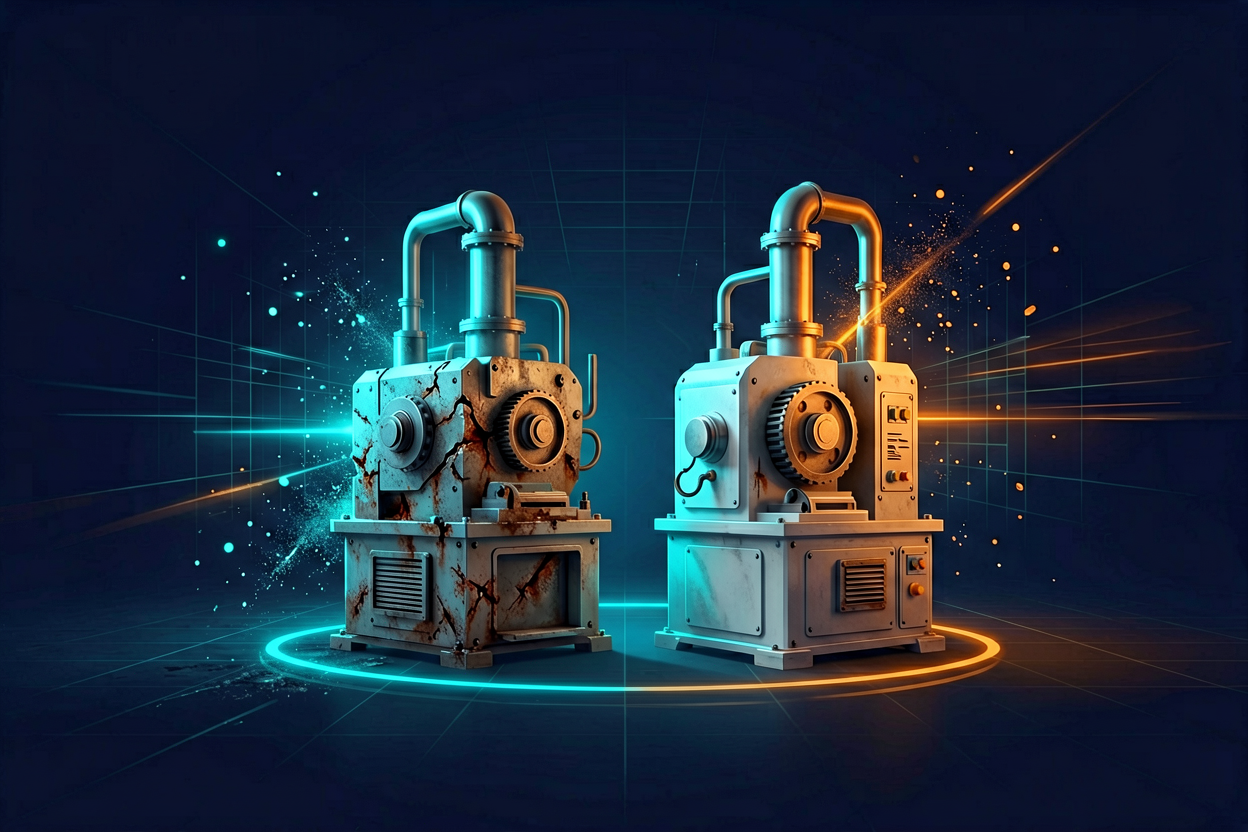
Off-the-shelf models are trained on broad, generic datasets. They work well when your problem looks like everyone else's problem.
But in manufacturing, your problems are different from everyone else's. That's the whole point.
- Your defect patterns are specific to your machines, materials, and operators.
- Your production scheduling constraints reflect your equipment mix, shift patterns, and customer requirements.
- Your quality standards are shaped by your industry, your clients, and your process history.
A model trained on "average manufacturing data" will give you average predictions. And in a business where 5% improvement in OEE can mean millions in revenue, average isn't good enough.
We've seen this clearly: a demand forecasting model trained on national retail data performed at 65% accuracy for a specific food manufacturer. After training a custom model on their 14 months of actual sales history, accuracy jumped to 85%. Same problem. Same company. Different data. Different result.
Reason 2: The Black Box Problem
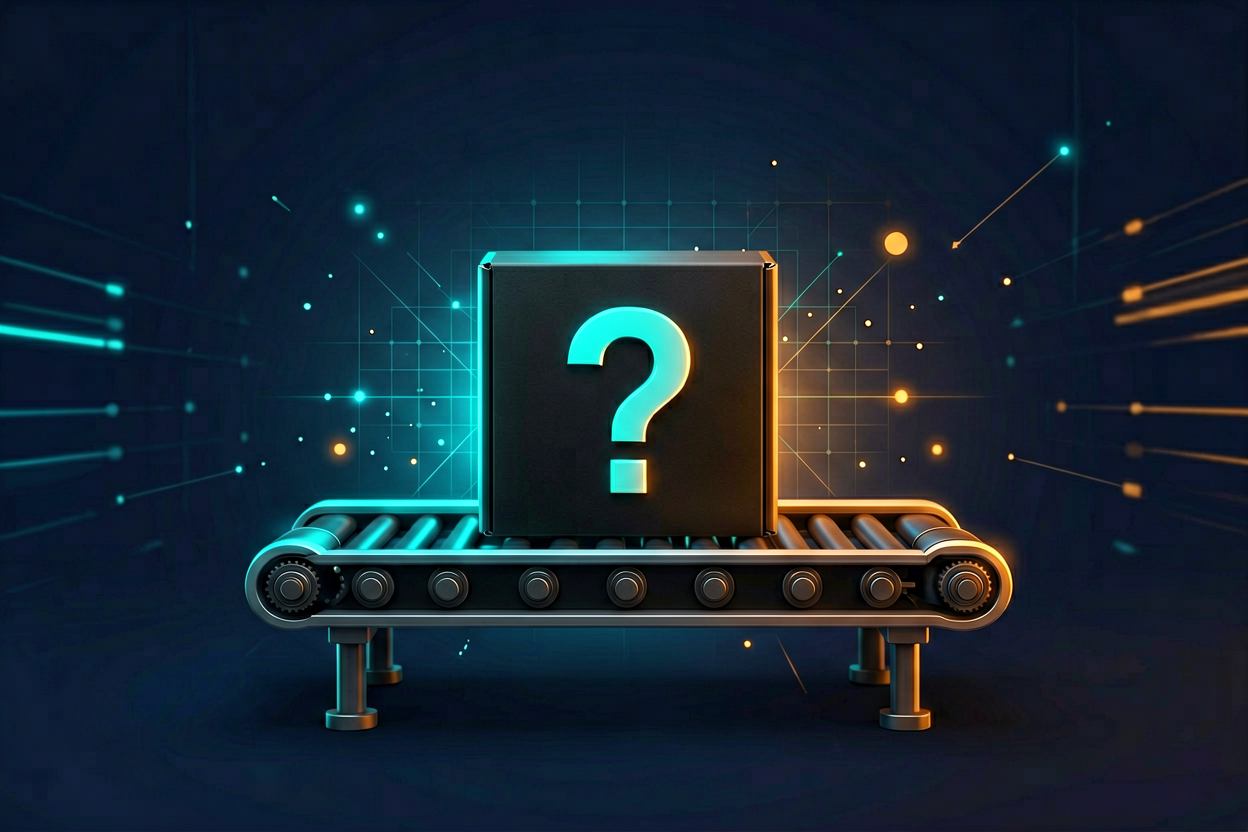
When a cloud AI API returns a prediction — "schedule this job on Line 3" or "this batch will have a 73% defect probability" — it gives you a number without a reason.
In a factory, you can't act on a prediction you can't explain.
- The production manager needs to know *why* Line 3 is recommended before committing resources.
- The quality team needs to understand *what factors* drive the defect prediction before shutting down a line.
- The CFO needs to justify the AI recommendation to the board.
Off-the-shelf models rarely offer interpretable outputs. Custom models, built with explainability from the start, can provide feature importance rankings, SHAP values, and decision path analysis that give humans the confidence to act.
Reason 3: Deployment Is Where Pilots Go to Die
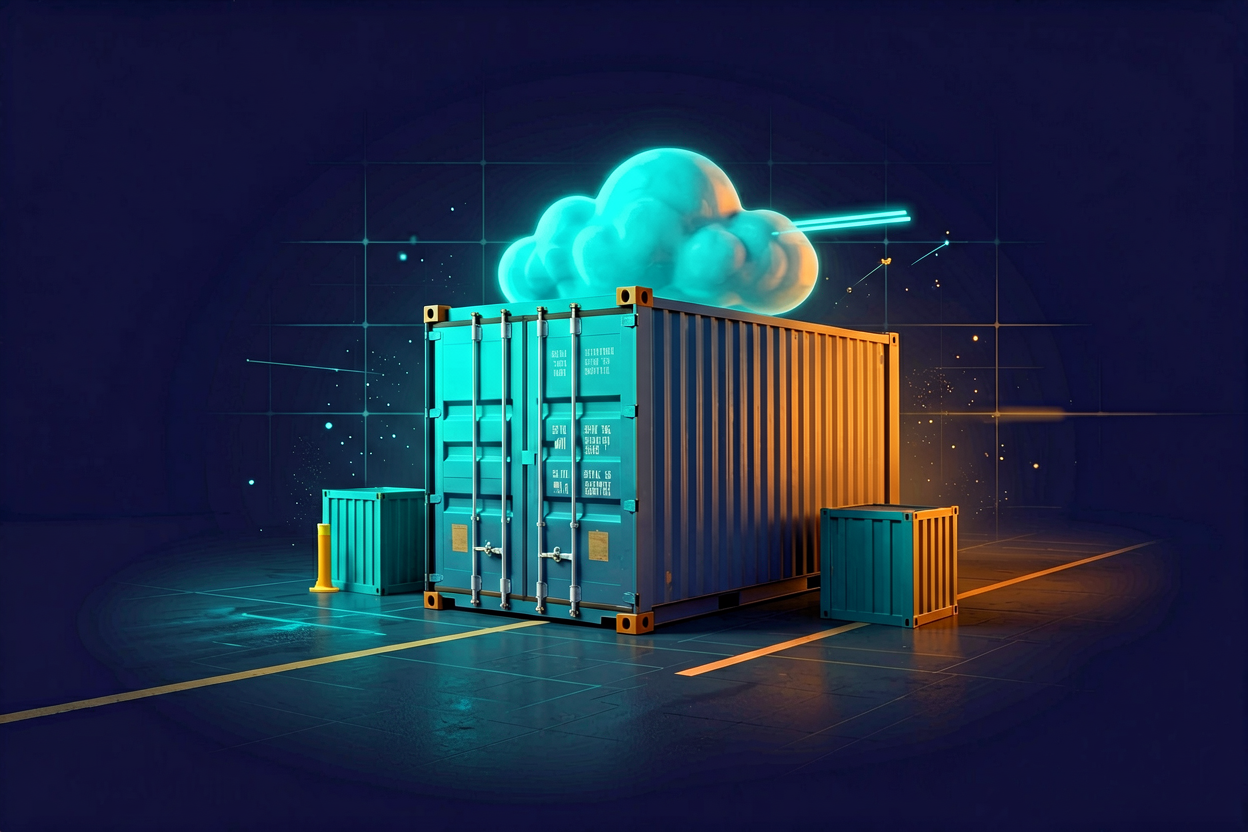
The gap between a working notebook and a production system is where most AI projects fail.
Cloud AI platforms require:
- Data to be extracted, transformed, and sent to an external API
- Network connectivity and API rate limits to be managed
- Procurement and security reviews to be passed (often taking longer than the model development)
- Ongoing costs that scale with usage — which means the more successful the AI, the more expensive it gets
We've seen proof-of-concepts stall for months on MLOps infrastructure, integration challenges, and procurement cycles. The model was ready. The business case was clear. But getting it from a data scientist's laptop to the factory floor took longer than the budget cycle.
The alternative is simpler: build the model where it needs to run. A standalone package, deployed on existing hardware, talking to existing systems via simple APIs. No cloud dependency. No per-predictiction costs. No procurement maze.
Reason 4: You're Renting Your Own Intelligence

When you use a cloud AI service, your data flows through their infrastructure. Their model learns from patterns across all their customers. You get a slice of the collective intelligence — but you don't own any of it.
Switching costs rise every quarter. Your processes adapt to the platform. Your team builds expertise around the tool. And then the pricing changes, the API changes, or the service changes — and you have no good alternative.
Your data is proprietary. Your process is proprietary. The models trained on them should be too.
When you own the model — the weights, the architecture, the deployment — you own a competitive asset that nobody else has. When you rent it from a vendor, you're paying for something your competitors can buy too.
The Alternative: Private AI

Private AI means training models on your data, in your environment, with outputs you own. Here's what it looks like in practice:
1. Data audit: You share a representative sample of your historical data. We assess quality and define the training set. No full data transfer required at this stage.
2. Model training: We train, validate, and benchmark. You receive a written report with accuracy metrics, feature importance, and recommended next steps.
3. On-premise deployment: The model ships as a standalone package — a FastAPI endpoint, a container, or integrated into your existing systems. It runs in your environment, on your hardware.
4. Continuous optimization: Optional monthly tuning with your newest data. The model gets smarter over time, adapting to your changing conditions.
The timeline is typically 4-6 weeks from kickoff to production. Most projects ship an analysis report within the first 7 days.
When Off-the-Shelf *Does* Work
We're not saying custom AI is always the right answer. Off-the-shelf models work well for:
- Generic tasks (document OCR, basic sentiment analysis, standard image classification)
- Initial exploration and proof-of-concept work
- Problems where your data truly does look like everyone else's
But when the problem is specific to your business — your production line, your customers, your process — a custom model trained on your data will outperform a generic one. Every time.
How to Evaluate Your Option
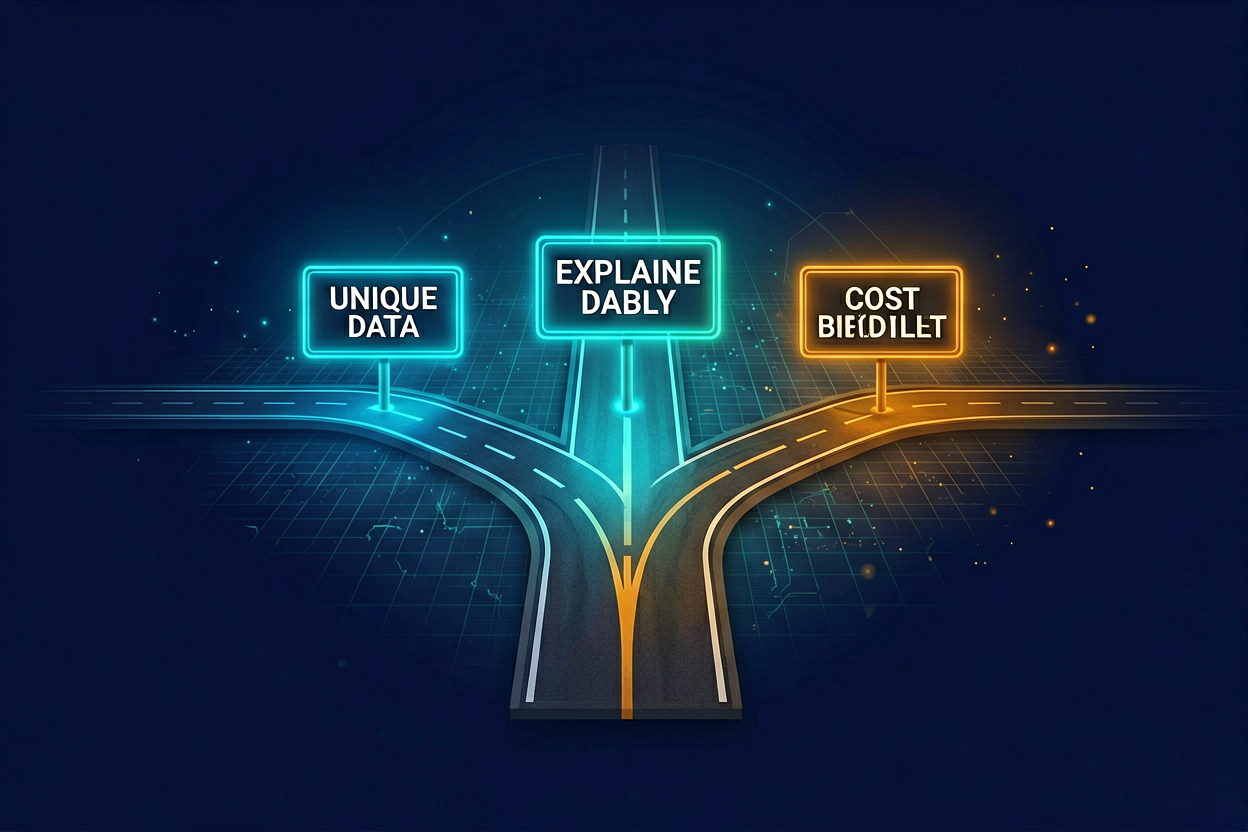
Ask yourself three questions:
1. Is my data unique? If your problem could be solved with publicly available datasets, off-the-shelf may work. If your competitive advantage comes from data nobody else has, you need a custom model.
2. Do I need to explain the predictions? If your team needs to understand *why* before acting, you need a model you can inspect.
3. Can I afford per-prediction costs at scale? If the AI succeeds and you make thousands of predictions per day, cloud pricing becomes a significant ongoing expense.
If the answer to any of these is "yes," private AI is the path worth exploring.