
The New Competitive Divide

AI is becoming a commodity. The best models are available as APIs. Anyone with a credit card can call GPT-4, Claude, or Gemini. The barrier to *using* AI has never been lower.
But here's the paradox: when everyone can use the same AI, the competitive advantage shifts to what nobody else can access.
That's your data. And the models trained on it.
Think about it: two companies call the same AI API with the same prompt. They get the same answer. The API doesn't know either company's customers, processes, or history. It gives a general response — useful, but not unique.
Now imagine each company trains a model on its own data:
- Company A's model knows which customers are likely to churn, because it learned from Company A's actual churn patterns.
- Company B's model knows which production parameters yield the best quality, because it studied Company B's specific machines and materials.
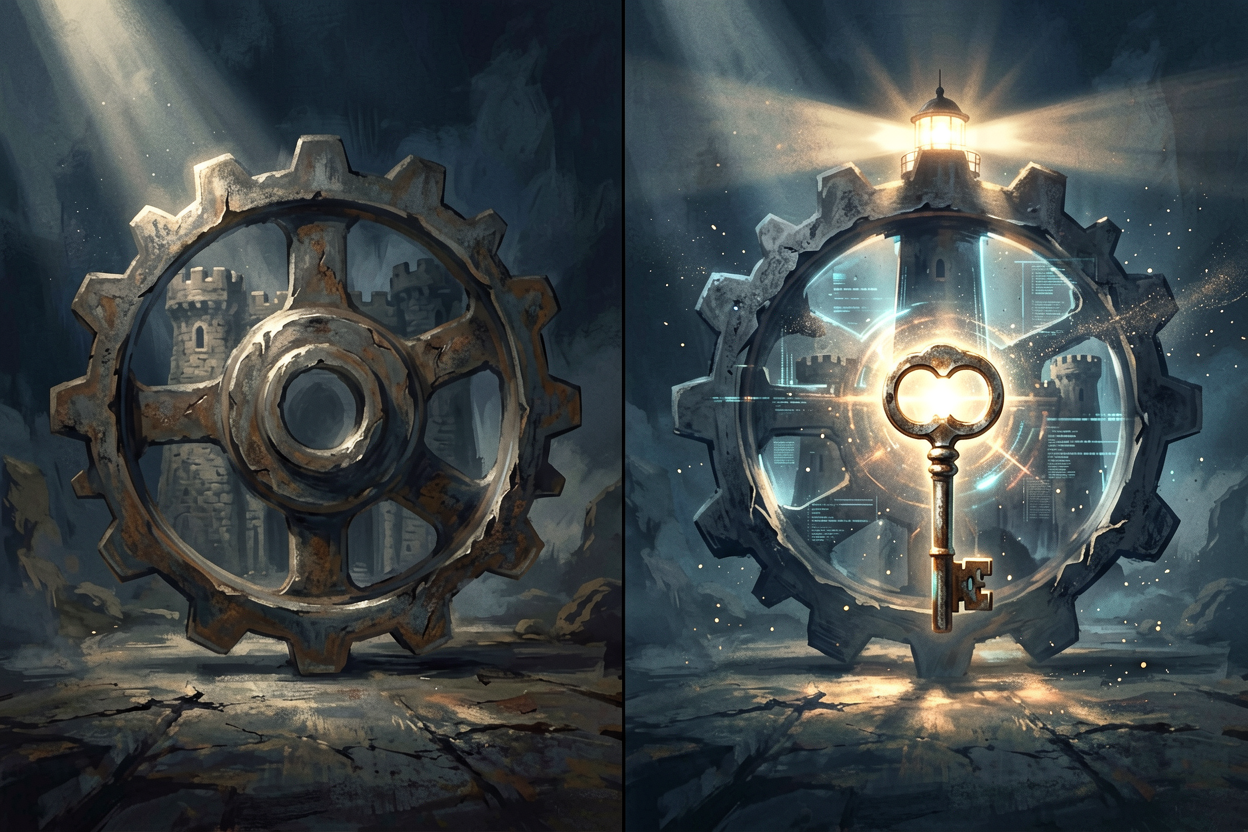
These models produce predictions that the other company's model literally *cannot* produce — because the training data is different. That's a moat.
What Is Private AI?

Private AI means AI models that are:
1. Trained on your data — not on a shared, multi-tenant dataset
2. Deployed in your environment — on your servers, in your private cloud, or on-premise
3. Owned by you — the weights, the architecture, the intellectual property
It's the difference between renting intelligence and owning it.
Private AI vs. API Models: The Comparison
| Dimension | API Models | Private AI |
|---|---|---|
| Training data | Shared, generic | Yours, unique |
| Predictions | Same for everyone | Tailored to your business |
| Data privacy | Data leaves your environment | Data never leaves |
| Cost structure | Per-call pricing, scales with usage | Fixed build cost, marginal cost near zero |
| Explainability | Limited or none | Full model inspection |
| Vendor dependency | High — locked into their API, pricing, roadmap | None — you own the deployment |
| Competitive moat | None — competitors buy the same thing | Strong — built on proprietary data |
Why Data Ownership Matters More Than You Think

Your competitors have access to the same open-source models. They can call the same APIs. They can hire the same consultants.
The only thing they can't get is your data.
Every work order, every quality inspection, every customer interaction, every production run — these records accumulate into a dataset that is uniquely yours. A model trained on this dataset learns patterns that exist nowhere else in the world.
This is why we always say: your data is your competitive advantage. The model is just the mechanism that turns that advantage into predictions.
And the value compounds over time:
- Month 1: The model knows what happened last quarter.
- Month 6: The model knows seasonal patterns and operator effects.
- Month 12: The model knows which process changes improved quality and which didn't.
- Year 2: The model has more institutional knowledge than any employee — and it never forgets, never quits, and never has a bad day.
When Private AI Makes Sense
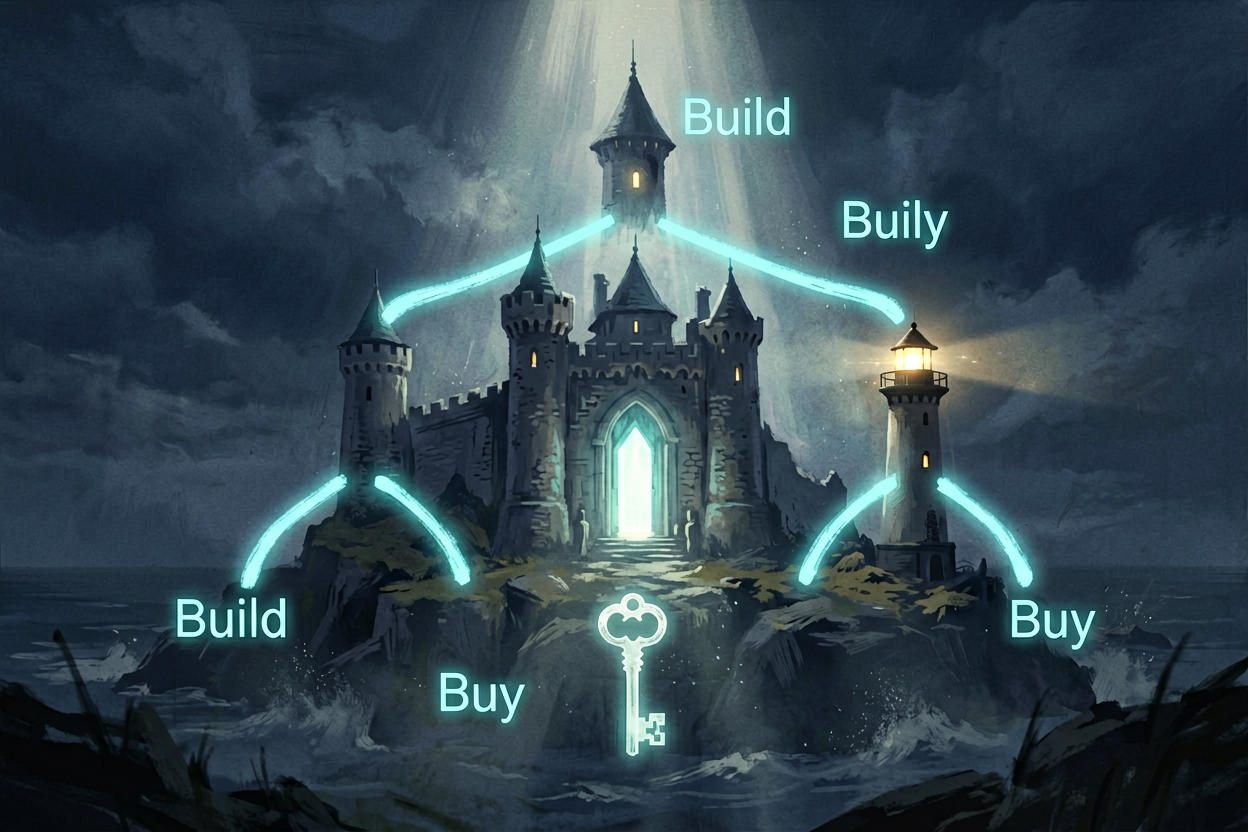
Not every use case needs a private model. Here's our rule of thumb:
Use an API when:
- The task is generic (OCR, translation, basic classification)
- You need to move fast and don't have historical data
- Per-call costs at your expected volume are acceptable
Build a private model when:
- Your problem is specific to your business or industry
- You have 3+ months of historical data
- You need predictions tailored to your unique data patterns
- Data privacy or regulatory compliance requires on-premise processing
- You want a competitive advantage that compounds over time
- You can't afford per-call costs at production scale
The Technical Approach
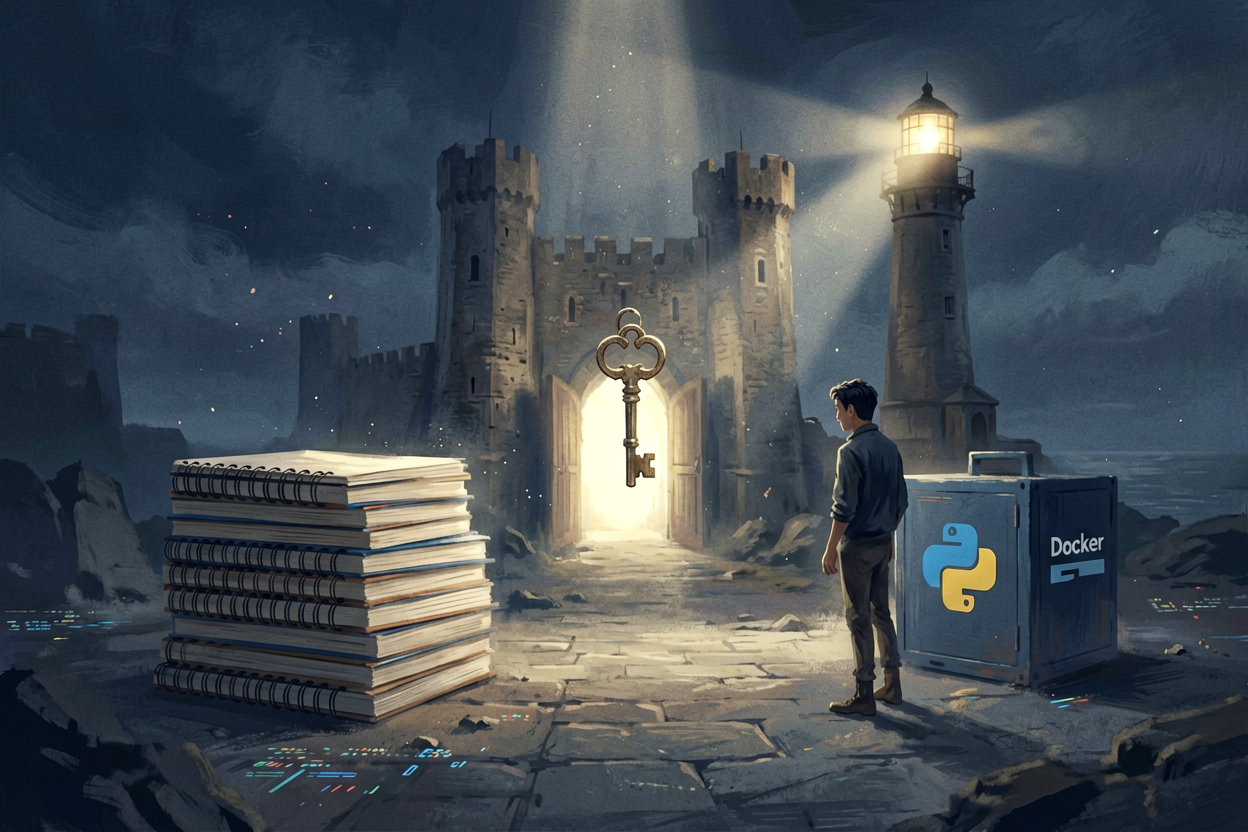
Here's what a typical private AI engagement looks like:
Tech stack: Python 3.13, FastAPI, scikit-learn, XGBoost, PyTorch for neural components. We adapt to your existing infrastructure.
Data requirements: At least 3 months of historical records with timestamps, entities, and outcomes. The more granular, the better.
Timeline: Analysis report within 7 days. Production model in 4-6 weeks.
Deployment: FastAPI endpoint, Docker container, or custom integration — whatever fits your environment.
Ongoing: Optional monthly retraining to keep the model current. We hand off runbooks, training, and 30 days of included support.
The Moat Compounds

A private AI model is different from most business investments because it gets more valuable over time:
- Every new data point improves the next training cycle.
- Every production prediction generates feedback that refines the model.
- Every process change is captured in the data and learned by the model.
- The longer you run it, the more it knows — and the harder it is for competitors to catch up.
Your competitors can buy the same API. They can hire the same consultants. They can read the same papers.
They can't train a model on your data.
That's the moat. And it gets deeper every month.
Getting Started

Every engagement starts with a free data assessment. Share a representative sample of your historical data, and we'll tell you:
- Whether a custom model is feasible
- What accuracy we expect
- What business impact is realistic
- How long it would take
No sales pressure. No commitment. Just an honest assessment of what your data can do.